Hey there,
I'm going to tell you how I accidentally discovered the best way to find AI Assessment clients and establish myself as a local AI expert at the same time.
Here's the story.
I reached out to a friend of mine who's a realtor because I wanted venue recommendations for a free "AI for Small Business" meetup I was planning to host.
She ended up recommending that we host it in her office because she could use it as a value-add for her clients and realtor friends.
So she blasted it to her network and we posted it on Luma and Meetup.com.
I showed up with a name tag stack and a sign-in sheet. Every person who walked through the door gave me their name, email, and phone number before they sat down.
I did a 20-minute presentation on Claude and the AI tools I use every day. Took questions for another 10 minutes. Then we just hung out. I worked the room, talked to people 1-on-1, and asked what was eating their time.
The event ended. I went home. The next morning I followed up with every single attendee inside 24 hours.
One of those follow-ups was a realtor who said yes to an AI Tools Assessment.
This simple, free event that took less than 2 hours of my time to organize turned into a $999 client with minimal effort.
This is how local trust works in 2026. And there are 6 more ways to build it that almost nobody is doing.
Here's why these work, and exactly how to run them this week.
The main thing you need to understand: business owners in your city are dying for someone to show them what AI can actually do.
They're curious. They're a little scared. They know they're falling behind. But they don't know who to trust, and the internet feels like a sea of grifters and AI bros.
When you show up in person, you bypass that entire problem.
You just need to know more than the people in the room. You don't need to be the world's foremost expert on AI.
And that bar is MUCH lower than you think.
The dentist who wants to automate appointment reminders doesn't need a PhD. The real estate office that wants AI to write listing descriptions doesn't need a Stanford engineer. They need a competent operator who can show up, build it, and explain it in plain English. That's the entire bar.
The biggest objection I get on this: "I'm not technical enough to pull this off."
Wrong frame. You're selling time back to the business owner, not AI. If you can use Claude, build a basic automation, and explain it without jargon, you're qualified.
Below are 7 ways to establish yourself as a local AI expert. Pick one and start this week. Don't try to do all of them.
Step 1: Host an AI for Business meetup.
Find a free venue. Library, coworking space, coffee shop with a back room, or partner with a local business like I did. Make a free Luma or Eventbrite page. Post it in local Facebook groups and on LinkedIn.
Run a 20-minute presentation on "3 Ways Local Businesses Are Using AI Right Now," then open it up for Q&A. Collect names, emails, and phone numbers at the door.
Step 2: Door-knock 10 local businesses.
Old school, still works. Walk into dentists, real estate offices, HVAC companies, law firms. Say: "I help local businesses save 10+ hours a week using AI tools. I'm offering a free 15-minute audit to show you what's possible. Interested?"
Most say no. One or two say yes. That's all you need. Do 10 a week for 30 days.
Step 3: Run LinkedIn outreach the right way.
Target business owners with 10 to 50 employees in your city. Big enough to have real problems, small enough that the owner still makes decisions.
Message: "Hey [Name], I noticed you run [Company] here in [City]. I've been helping local businesses automate repetitive tasks with AI. Not trying to sell you anything, just curious: what's the most annoying part of your day-to-day operations?"
Send 20 a day. Start conversations, not pitches.
Step 4: Offer free AI audits to your network.
Text friends, family, former coworkers, people from your gym or church. "Would you be open to a 20-minute call where I look at your workflow and tell you what could be automated? No charge, I'm building my portfolio."
My first three paying clients came from this exact text. Now I charge $999 for the same audit because I have the case studies to back it up.
Step 5: Partner with agencies and consultants.
Marketing agencies, business coaches, accountants, web developers. They already work with your ideal clients every day.
Reach out: "If any of your clients ever ask about AI, I'd love to be your go-to referral. Happy to give you a cut of any deals that close." They turn into a sales team without payroll.
Step 6: Host AI Office Hours at a coworking space.
Find a local coworking spot. Offer free weekly office hours for their members. Two hours every Thursday. Members drop in with questions. You solve problems on the spot.
Most spaces will say yes because it's free value for their community. You walk away with credibility, warm leads, and a stack of content ideas.
Step 7: Post your wins consistently.
Every time you help someone, document it. "Just helped a local dentist automate appointment reminders. 45 minutes of setup. Now it runs on autopilot." Post 3 to 5 times a week for 90 days. Mix wins with education.
The goal is to stay top of mind so when someone in your network thinks "I need help with AI," they think of you. You do not need to go viral for this to work.
That's the whole playbook.
Seven plays. None of them require a big budget, a huge audience, or a technical background. They require you to show up in your city and be more helpful than the next person.
Pick one this week. Run it. Reply and tell me which play you picked and what happened. I read every response.
- Corey
P.S. I'm releasing a YouTube video next week doing a deep dive on all 7 of these methods. Subscribe to my channel so you don't miss it.
A few notes/tweets/cool things sourced from the AI community.
1)
Building with AI is starting to feel like a video game.
2)
If you think the AI services market is saturated, look at this image.
3)
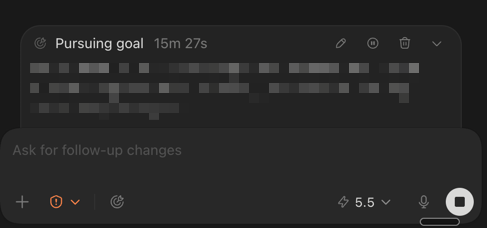
Run /goal in Claude Code or Codex. Thank me later.
Thanks for reading the Corey's Notes newsletter. I'd appreciate it if you sent it to a friend that might find it interesting.
Be sure to check out t he Build With AI podcast on Apple, Spotify, and YouTube. If you're a non-technical entrepreneur who wants to learn how to integrate AI into your business, you'll love it.
Be back next week.
-Corey